Soldier health and performance monitoring
What we do for defense programs
A soldier's condition changes constantly in the field. Today it is measured before a deployment and after one — almost never in between.
We build the measurement into the uniform itself. And we do the whole job: the materials, the sensing, the electronics, the testing, and the manufacturing at scale.

Six garment systems, head to toe
Each system is a separate build. Programs usually start with one and add others as the requirement firms up.
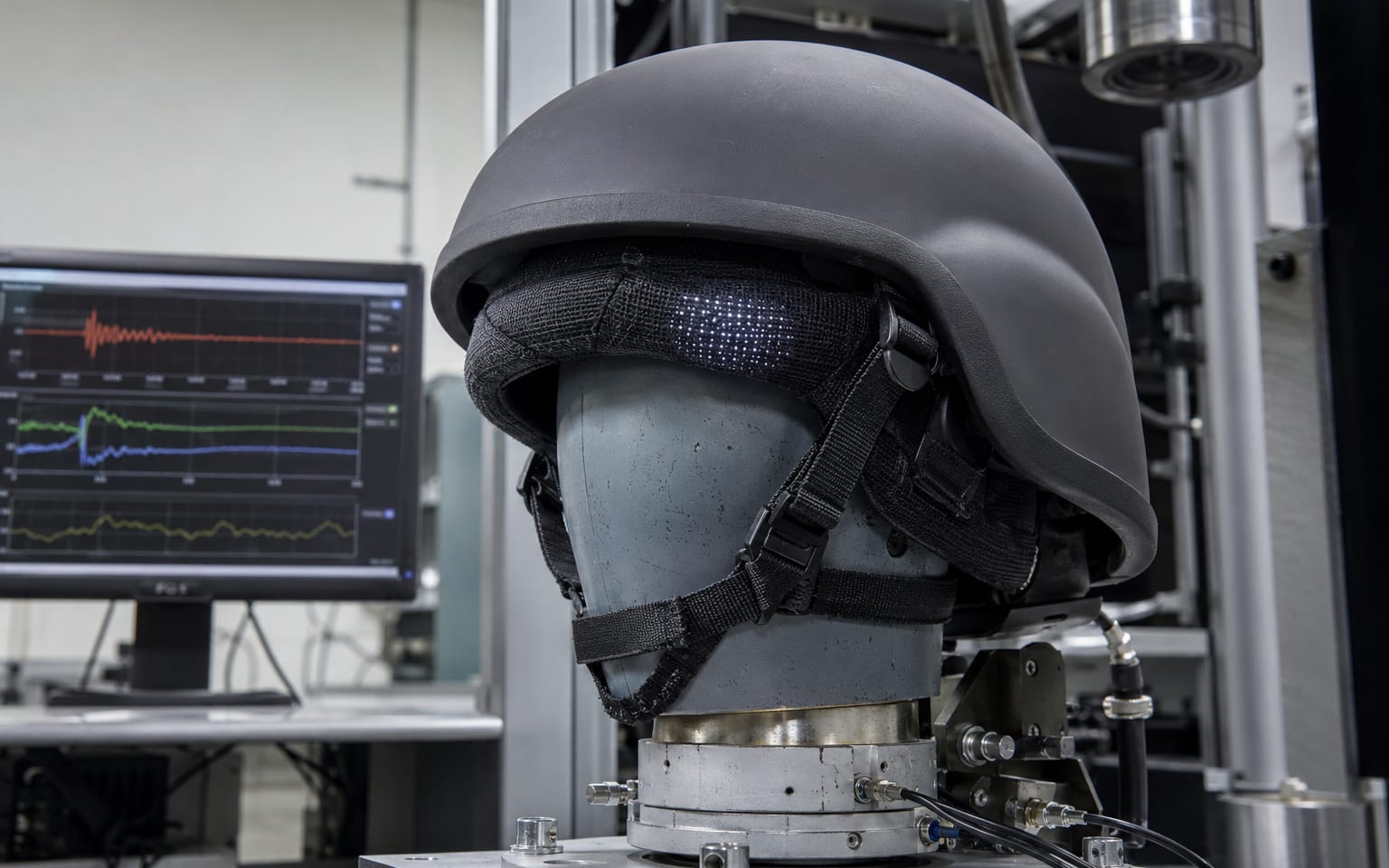
Myant Helmet
Impact Force · Head Acceleration · Temperature · Motion / Orientation
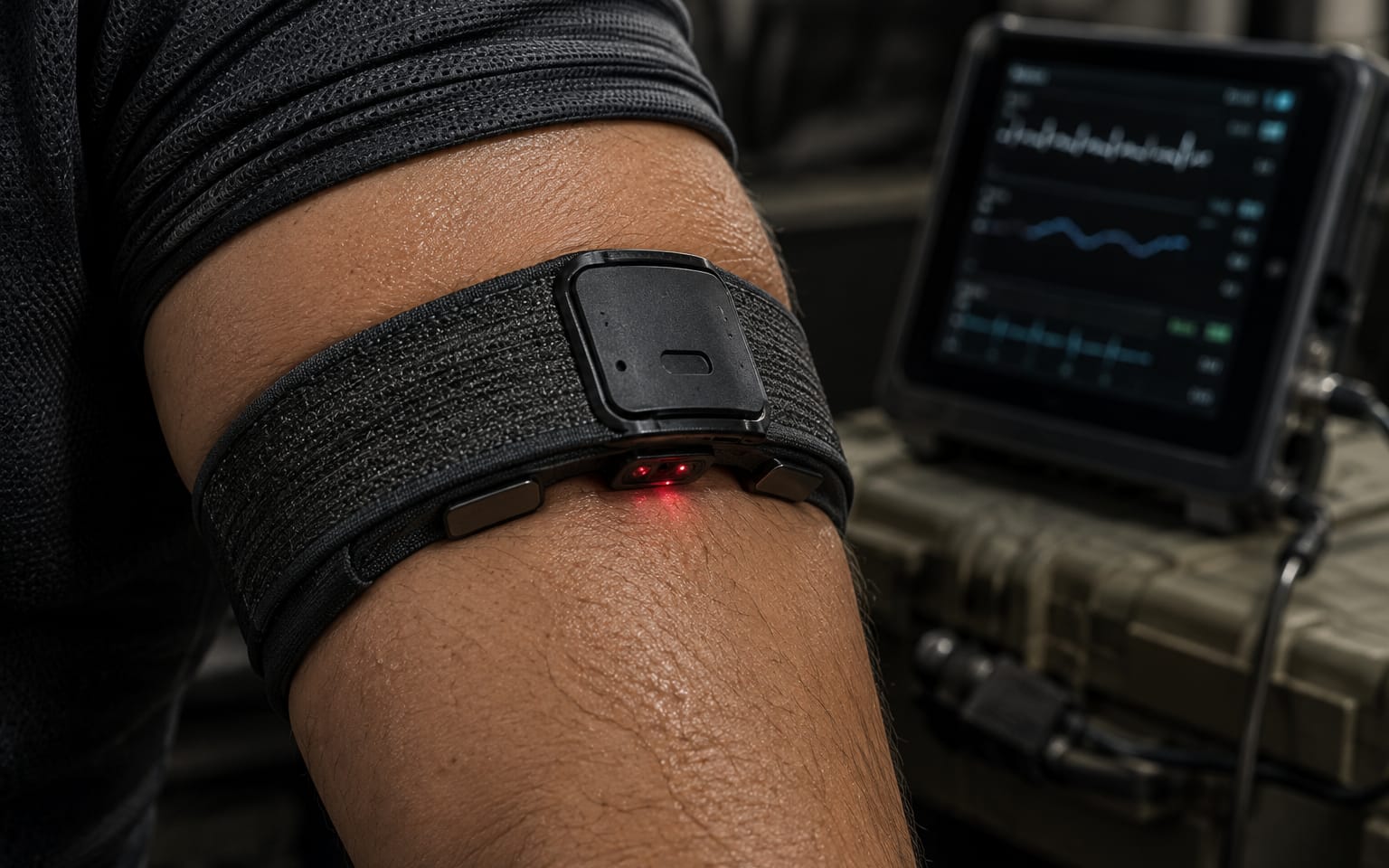
Arm Electronics Band
Blood Oxygen (SpO2) · Galvanic Skin Response (GSR) · Skin Temperature · Heart Rate (PPG) · Stress Index
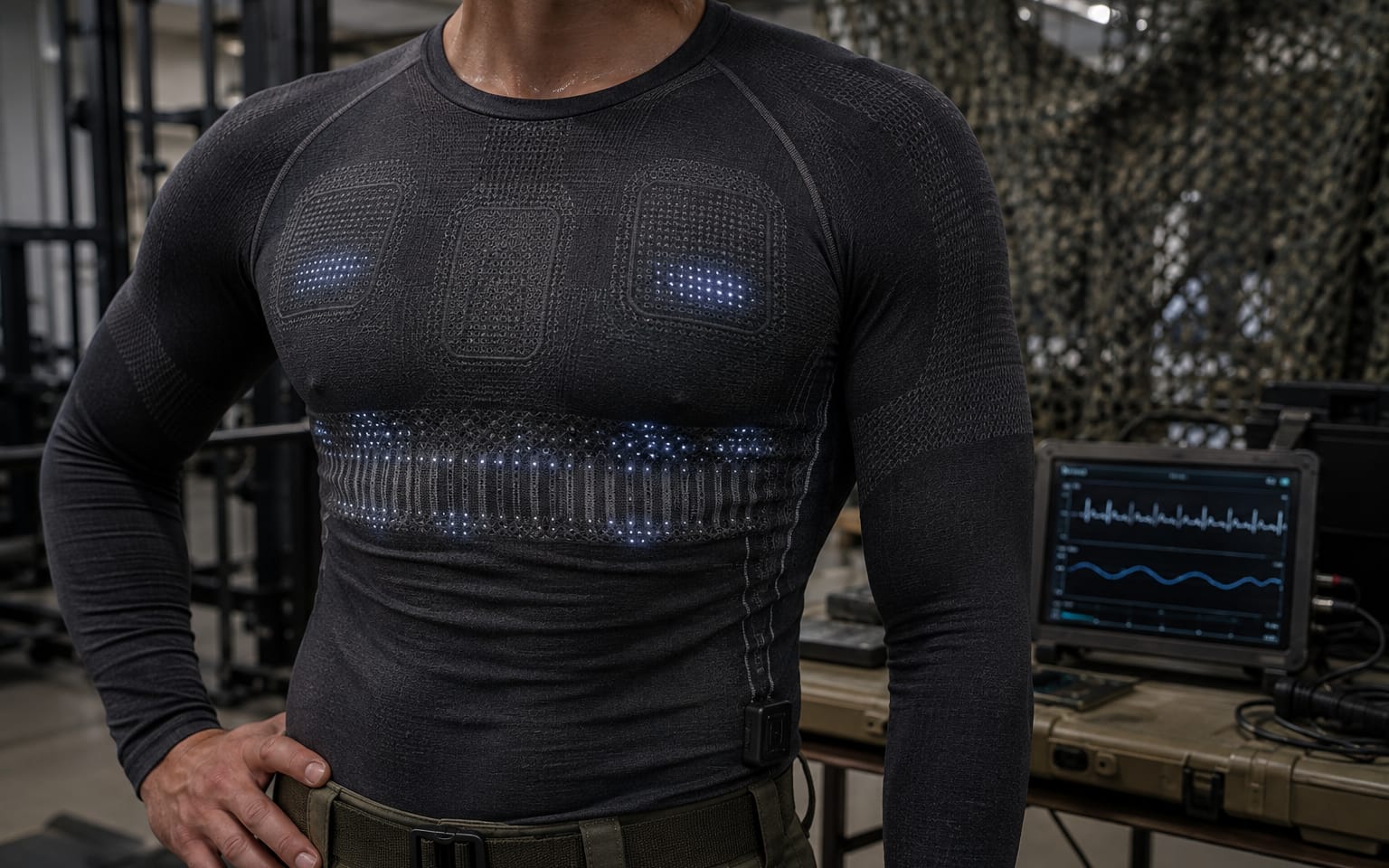
Tactical Shirt
ECG · Heart Rate (HR) · Heart Rate Variability (HRV) · Respiration Rate · Breathing Pattern
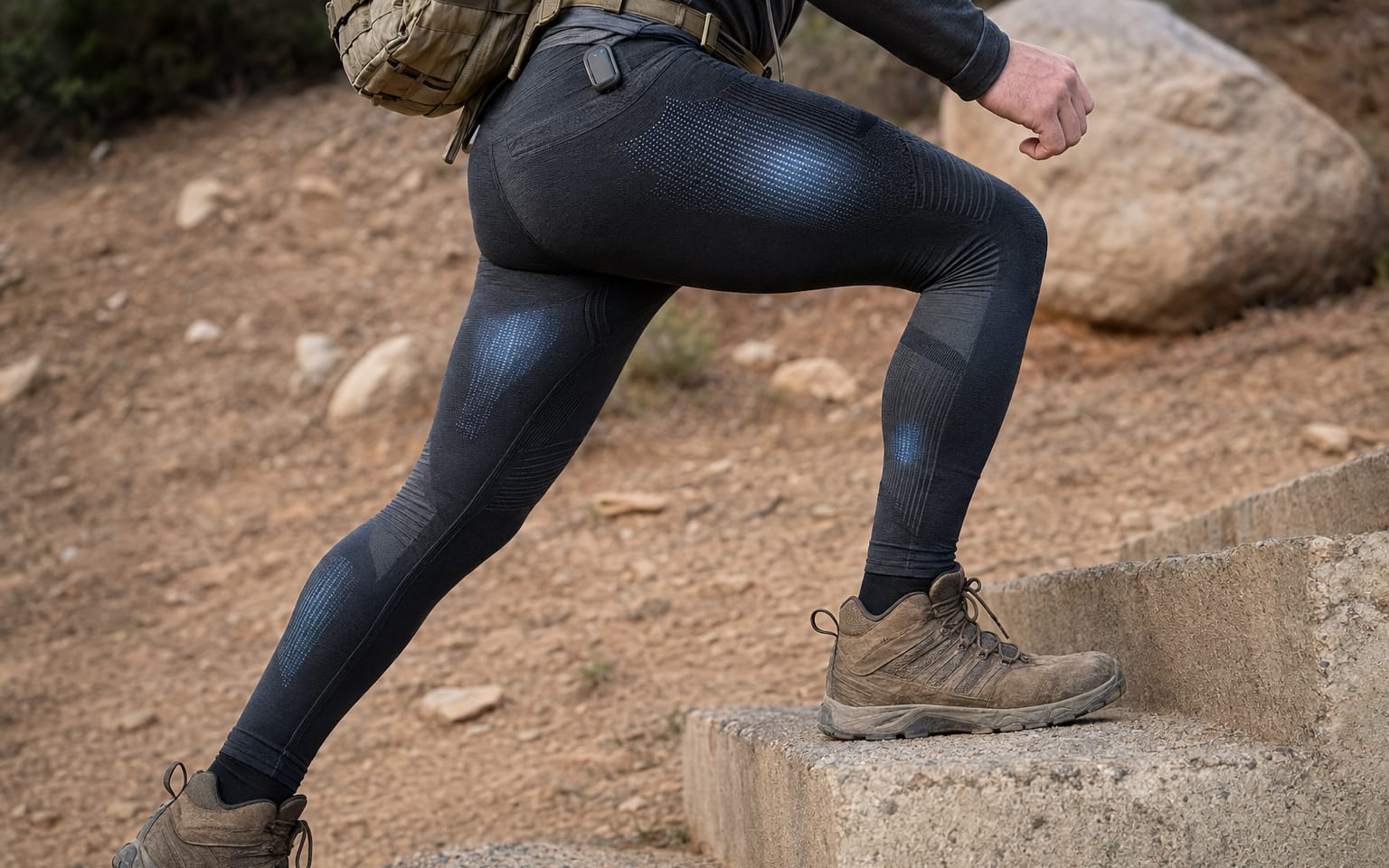
Smart Leggings
Muscle Activity (EMG) · Muscle Fatigue · Strain / Load · Movement / Gait · Joint Angle (Knee, Hip)
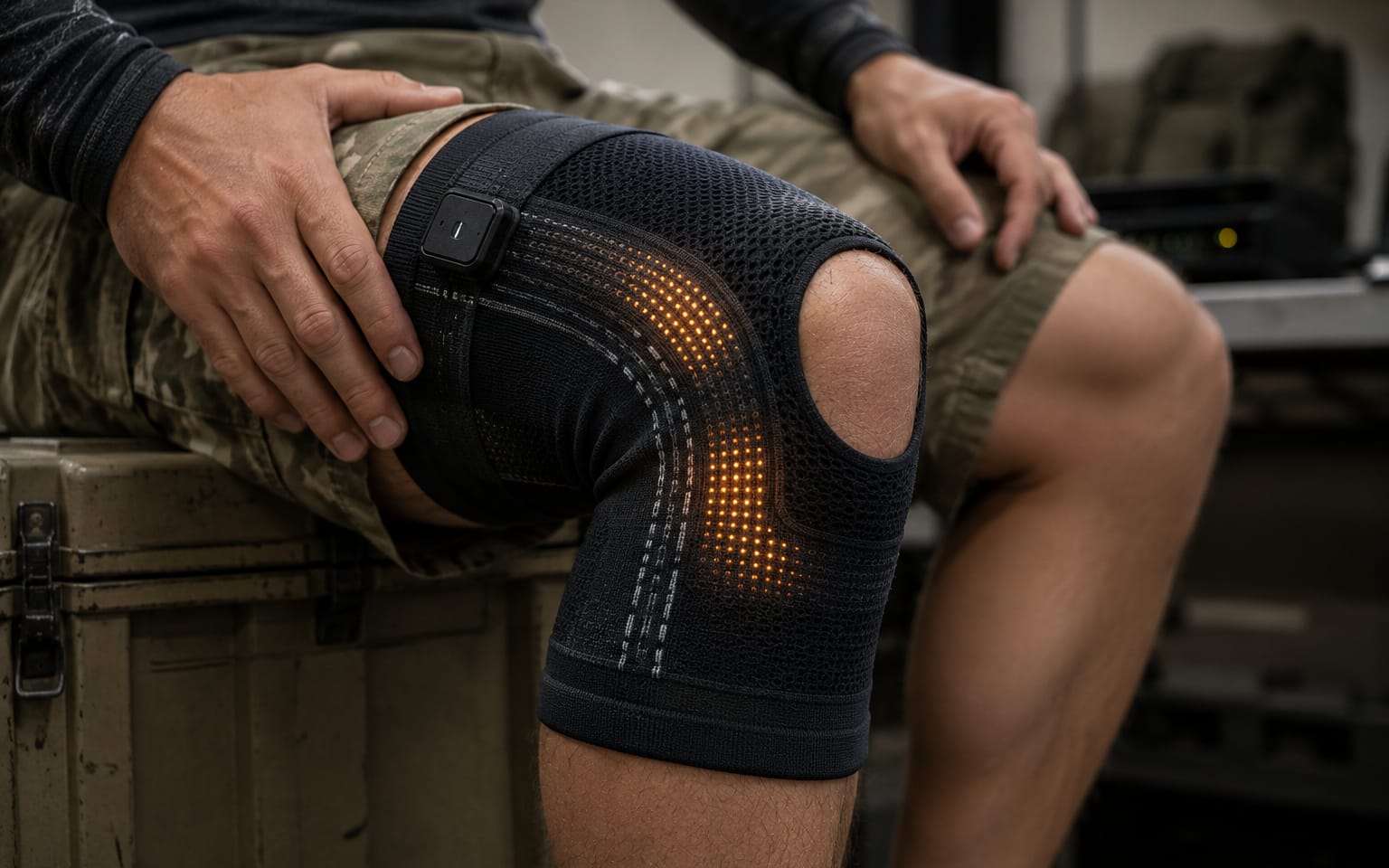
Heated Knee Brace (SKN)
Knee Temperature · Joint Angle & Stability · Impact / Shock · Strain · Recovery / Inflammation
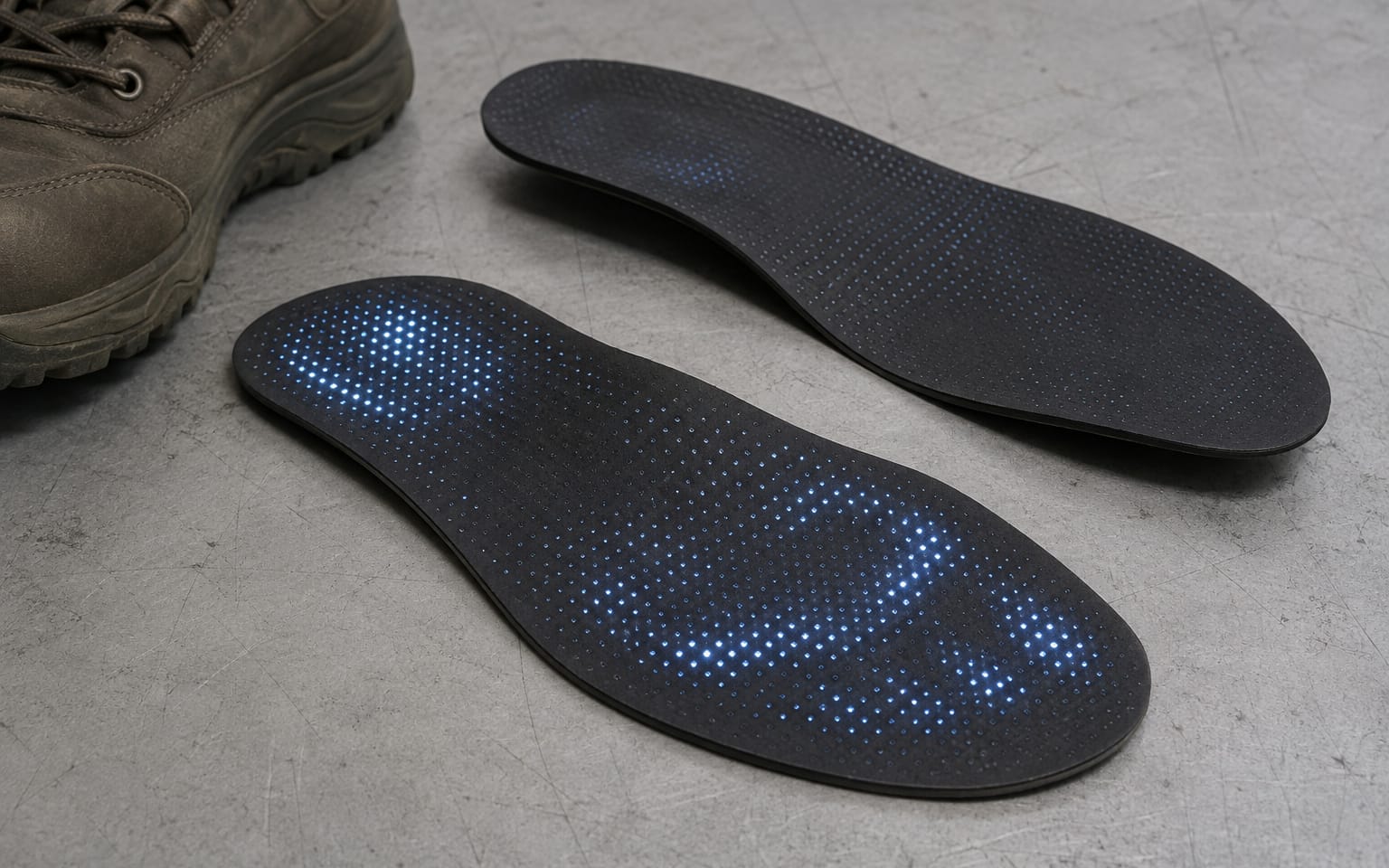
Pressure Sensing Insoles
Pressure Distribution · Calf / Step Analysis · Balance · Impact Force · Cadence


The validation record
- Signal quality
- Textile-ECG validation of the tested dry-electrode construction reported r² = 0.93; validated IMUs correlate to r = 0.98 against a Xsens reference.
- Durability
- Neurostimulation constructions held through 30 wash and 1,000 stretch cycles.
- Disclosure
- Specific deployments and partnerships are listed only with written client approval.
The system in detail
Uniform capabilities
Our Textile Computing™ platform brings sensing, actuation, and interconnect directly to the skin — continuous, real-time acquisition of physiological data.
- Physiological Monitoring
- Continuous ECG and EMG monitoring knitted into undergarments for long-term mission wear.
- EEG Cognitive Assessment
- Integrated helmet-compatible sensors for brainwave monitoring, detecting cognitive load and fatigue in real-time.
- Neurostimulation
- NMES therapy for in-field injury recovery and muscle fatigue reduction, highly durable (30 wash + 1,000 stretch cycles).
- Thermal Regulation
- Targeted thermal zones to support operational effectiveness in extreme environments, directly integrated into tactical base layers.
- Haptic Feedback
- Tactile alerts and communication embedded directly into the textile, ideal for stealth operations where visual/audio cues are limited.
- Textile Wiring
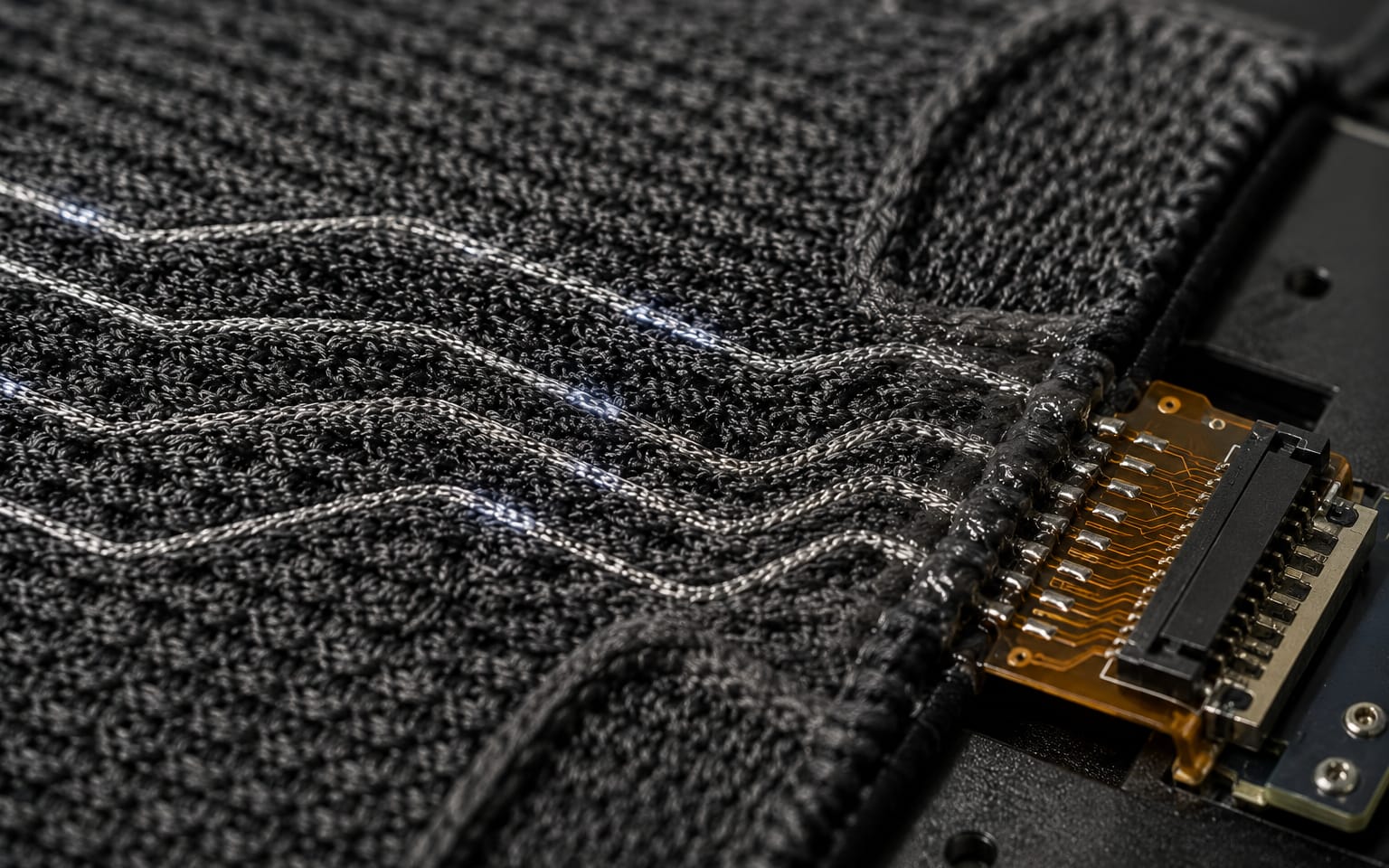
- Proprietary conductive yarns route power and data through the garment itself — no external cabling.
Textile interconnect
Active components integrated within the knit. Reliable sensing, actuation, and power delivery. Washable and stretchable.
- Integrated conductive matrix
- Seamless knitting
- Washable
- Stretchable
- High flexibility
Field applications
- Operational Readiness
- Continuous physiological monitoring deployed to assess soldier health and predict mission readiness before and during deployment.
- Cognitive Load & Fatigue Assessment
- Utilizing embedded EEG and biometric markers to measure stress and exhaustion, allowing commanders to optimize unit rotation.
- Field-Based Injury Recovery
- Deploying textile neurostimulation directly to injured personnel in the field, supporting recovery protocols without additional medical equipment.
- Training Optimization
- Biomechanical analysis utilizing validated IMUs to perfect movement efficiency and prevent injury during intensive physical training programs.
- Thermal Regulation in Extreme Environments
- Integrating active heating and cooling elements into base layers for personnel operating in arctic or desert conditions, maintaining core body temperature for optimal function.

How a defense program runs
Start from a capability requirement or from a single garment. The scope changes; the sequence does not.
- 01
Translate the requirement into a garment
Signal set, body site, wear time, and environmental envelope are fixed first — then the construction that carries them through mission wear.
- 02
Validate against the reference
Signal quality against reference instruments, wash and stretch durability, and thermal performance are characterized in-house before any field trial.
- 03
Manufacture at rate
Process development and pilot production run on the same campus, staged against manufacturing-readiness levels.
Build soldier-worn sensing with MyantX
Bring a capability requirement or a single garment system. We come back with the sensing it needs, how it gets validated, and what manufacturing at rate involves.