Biometrics, knitted into athletic wear
What we build for apparel and performance R&D
Athletes only get measured by what they actually keep wearing. Straps, watches and patches get left behind, and the picture thins out exactly when a season gets hard.
You bring the line, the squad or the platform. We build the sensing into the kit itself — yarn, electronics boundary and evidence — and carry it through to production.

What the kit reads
Physiology and mechanics from the same garment, continuously — not a spot check at the start and end of a session.
Cardiac load and recovery
Multi-lead ECG gives heart rate, resting heart rate and HRV — the basis for training zones and day-to-day readiness.
Breathing through a session
Breathing rate through the session, so effort and breathing pattern can be read against each other.
Core temperature
Continuous core-temperature tracking, to surface heat strain in endurance and outdoor training.
Muscle activation, left against right
Textile EMG tracks contraction across primary muscle groups — exposing asymmetry, and whether the stabilizers are firing at all.
Movement mechanics
Joint angles, coordination and range of motion, correlated to r = 0.98 against a Xsens motion reference.
Foot pressure and gait
Insoles map weight distribution, stance stability, gait phase and ground-contact time — the inputs behind running economy.
Why the kit survives a season
A sensor an athlete takes off measures nothing. The whole design problem is staying inside a garment that gets worn, sweated in, and washed with the rest of the kit.
- 01Knitted into the structureConductive yarns are knitted into the garment structure. No chest belt, no adhesive patch, nothing an athlete peels off between sessions.Conductive yarns
- 02Built to be washedConstructions are wash- and stretch-cycled in-house, because a garment that cannot survive team laundry is not a product.Analytical Testing
- 03One electronics boundaryA snap-on module is the only rigid part. The garment stays a garment, and the electronics come off before it goes in the machine.Product development
- 04Data out, into your systemSignal leaves as data you can route into your own app, athlete-management system or analytics stack.The Platform
- 05Made at apparel scaleKnitting, integration and pilot production run on one campus, staged against manufacturing-readiness levels.Scale-Up & Manufacturing
Where the sensing goes
Three constructions carry the sensing. Most programs start with one and add the others as the data set grows.
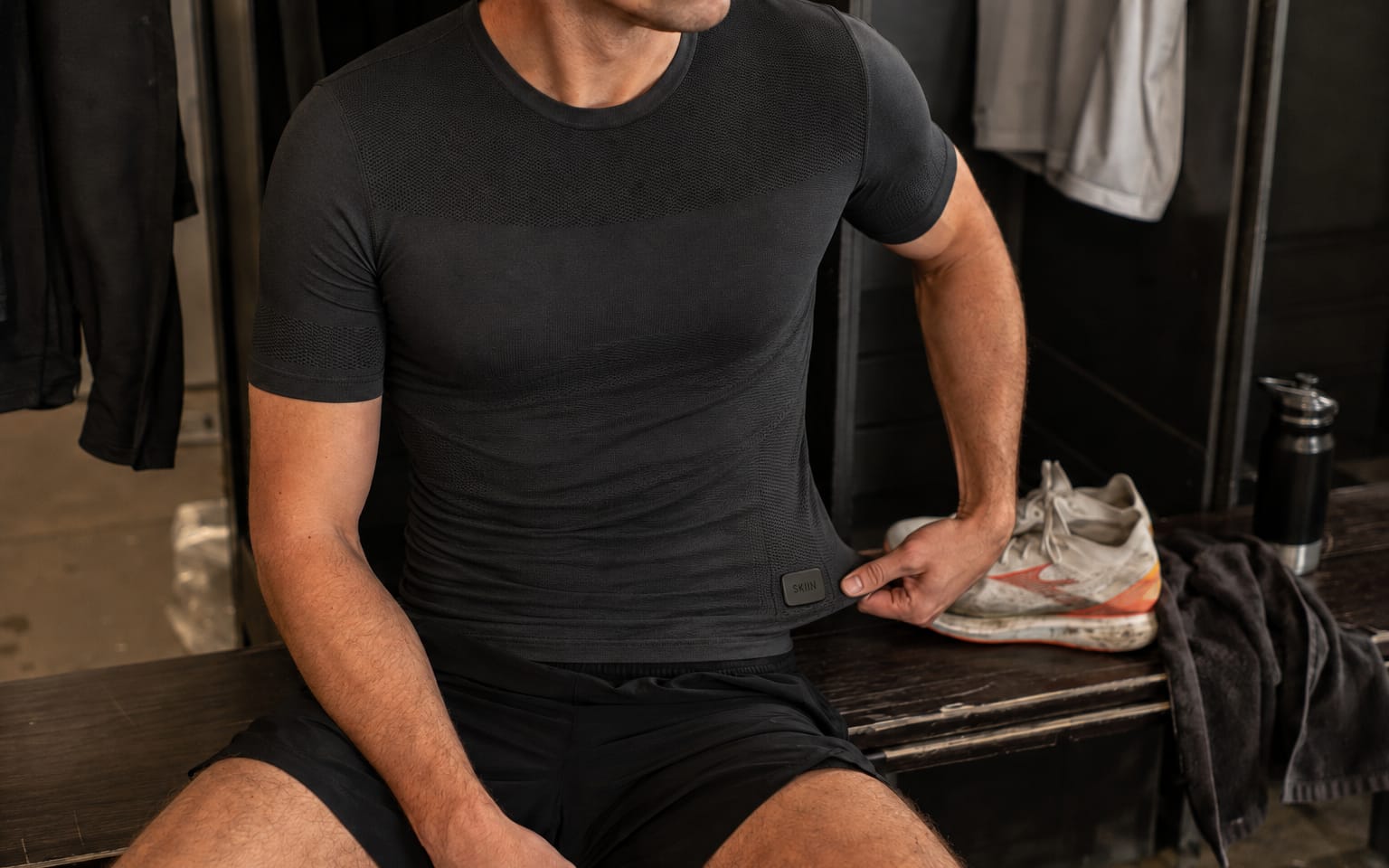 Torso
TorsoBase layers, bras and tanks
Sensing knitted into the garment structure, not added to it — so the kit stays the kit an athlete already puts on.
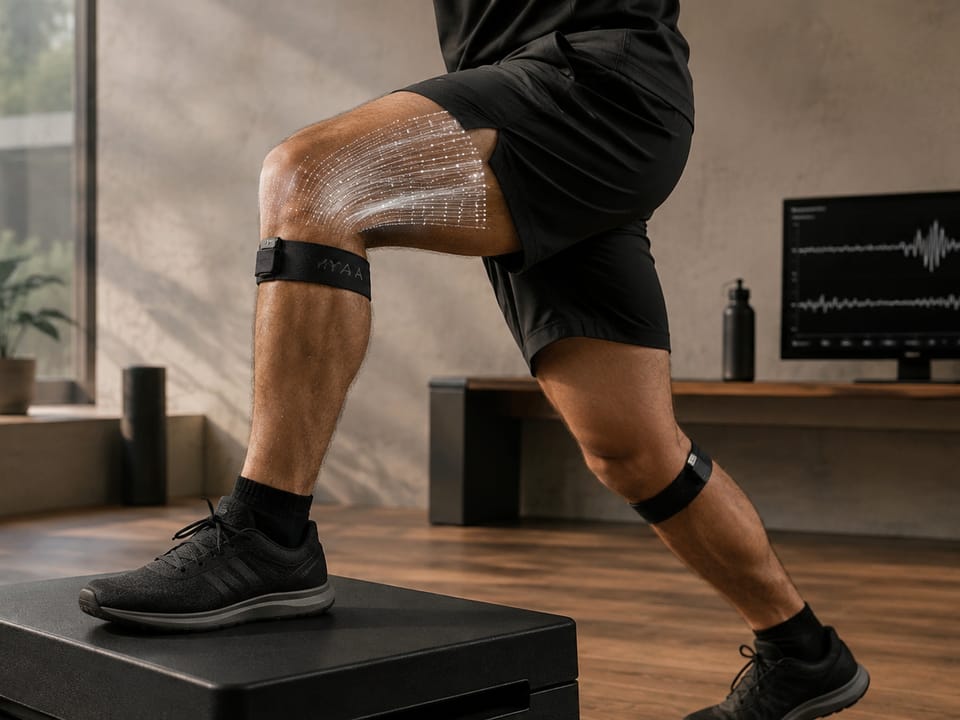 Limb
LimbTargeted bands and sleeves
Sensing placed exactly where the load is, over one muscle group — worn alone or alongside a base layer.
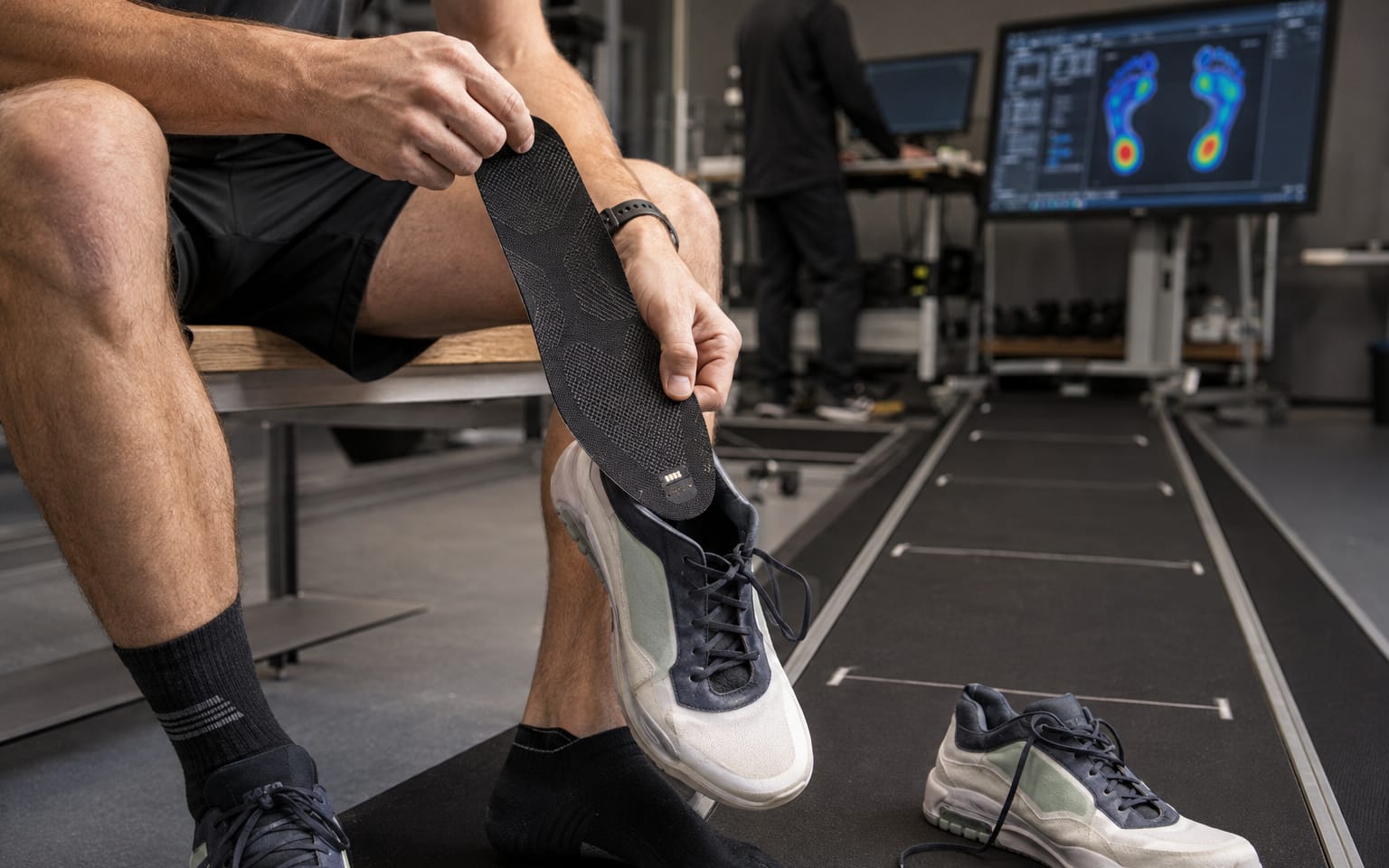 Foot
FootSmart insoles
An ultrathin sensing layer that drops into footwear a team already runs — no change to the shoe.


The numbers you will be asked for
- Signal quality
- Textile-ECG validation of the tested dry-electrode construction reported r² = 0.93; validated IMUs correlate to r = 0.98 against a Xsens reference.
- Durability
- Textile pressure sensors validated past 1,000,000 loading cycles in-house; constructions held through 30 wash and 1,000 stretch cycles.
- Configurable geometry
- Cell count and cell size are configured per product — 3–16 cells per insole zone in demonstrated configurations.
Figures describe demonstrated configurations of the tested sensor architecture, not a fixed catalogue part.
The system in detail
Movement, force, and muscle activation
Motion, pressure, and muscle sensors capture body mechanics in real time — the signal behind form analysis, injury prevention, and exertion tracking.
- Muscle activation (IMU-EMG)
- Localized muscle contraction across primary muscle groups — for left/right balance and stabilizer engagement.
- Full-body kinematics
- Joint angles, coordination, and range of motion, for a complete picture of technique.
- Foot pressure and gait
- Smart insoles map weight distribution, stance stability, gait phases, and ground-contact time.
- Lifting posture alerts
- Posture monitoring tracks spinal alignment and joint angles during heavy lifts, flagging high-injury-risk patterns.
Sensing built into the garment
The sensing is knitted into the fabric itself — no rigid straps, chest belts, or adhesive patches. Athletic garments capture physiological and biomechanical signal continuously, through real training, and stream it to a connected app.
- Engineered for training wear
- Conductive fibres are knitted into garments designed for the fit, comfort, and durability of everyday activewear.
- Continuous, garment-based sensing
- With the sensing embedded in the yarns, the garment tracks the heart, lungs, muscles, and movement continuously through a session — not in spot checks.
- Signal to the app
- A snap-on electronic module reads the fabric sensors and streams the data to a connected training app.
Physiological signals
The garments capture the physiological signals that define an athlete's condition and recovery.
- Heart rate and ECG
- Multi-lead ECG captures heart rate, resting heart rate, and heart-rate variability — the basis for training-zone and recovery analysis.
- Respiration
- Real-time respiration and breathing rate under load.
- Core temperature
- Continuous core-temperature tracking, to flag overheating during endurance or outdoor training.
- Recovery and sleep
- Overnight heart-rate and sleep-quality tracking, to gauge readiness between sessions.
The live training dashboard
The companion app surfaces the signal in real time — power output (W), heart rate (bpm), and sweat rate (L/min) — on phone or smartwatch.
- Group leaderboard
- Live heart rate and power output, compared across a training group.
- Muscle balance map
- Muscle activation levels alongside left/right foot-force balance (e.g. 45% / 55%).
- Exertion and fatigue
- Rate of perceived exertion and fatigue trends, to show when muscles are nearing their limit.
ImageImage to shootPhone straight-on: dark training dashboard with live watts, bpm, sweat rate, 45/55 left-right force balance, and exertion gauge.App viewCoaching, activity recognition, and safety
- Live audio coaching
- The app reads live vitals and adjusts pacing and intensity cues, including breathing.
- Activity recognition
- Automatic exercise detection, metric logging, and active-calorie calculation.
- Safety alerts
- Fall detection and rhythm alerts — relevant to fall-risk, mobility testing, and rehabilitation contexts.
The full garment lineup
A lineup of garments and insoles that captures physiological and biomechanical signal across the body.
- Underwear & Sports Bras for Base Tracking
- Performance Tank Tops for Cardio
- Targeted Compression Bands for Muscles
- Smart Insoles for Gait Analysis
Four ways a sports program starts
The same textile sensing behind SKIIN™ athletic apparel, available as a co-development platform — with a different starting point depending on what you already own.
Apparel and footwear brands
A line that has to sense, and still has to feel, fit and wash like the rest of your range.
What we configure · what you get
What MyantX configures- — Sensor geometry and knit structure designed into your garment or footwear
- — Wash, stretch and wear qualification against your specification
- — Electronics integration at a defined, serviceable boundary
Program outputs- — A product and sensing specification
- — A validated prototype with characterization data
- — A pilot-production and cost pathway
Teams and performance organisations
Athlete monitoring that only works if the athlete keeps the kit on — through training, travel and a full season.
What we configure · what you get
What MyantX configures- — Continuous cardiac, respiratory and thermal signal from training wear
- — Muscle-activation asymmetry and movement mechanics
- — Gait, ground-contact and load from sensing insoles
Program outputs- — A monitoring specification scoped to your squad
- — Signal characterized against reference systems
- — Data routed into your athlete-management system
Connected fitness and sports technology
A platform or device that needs richer body signal than a wrist optical sensor can give it.
What we configure · what you get
What MyantX configures- — Multi-signal textile sensing as your input layer
- — A module and firmware boundary you can build against
- — Governed data flow into your own application
Program outputs- — An integration architecture
- — A validated sensing prototype
- — A manufacturing pathway inside the Myant ecosystem
Sports medicine and rehabilitation
Return-to-play and rehabilitation calls that currently rest on what can be measured on a clinic day.
What we configure · what you get
What MyantX configures- — Load, asymmetry and range-of-motion tracking between sessions
- — Gait and mobility measurement outside the lab
- — Evidence planning scoped to your intended use
Program outputs- — A measurement specification
- — A characterized prototype with an evidence plan
- — A regulatory and manufacturing pathway
Put the sensing in your next product
Bring an apparel line, a piece of footwear, or a single sensing zone. Co-development starts at sensor geometry and ends at a product your line can make.