Clinical-grade textiles that sense and respond

What we do for healthcare and medtech teams
Health is measured in appointments. The things that matter happen in between — the irregular heartbeat nobody caught, the recovery that stalled at home.
We build products people can wear through all of it. And we take them the whole way: the materials, the sensing, the evidence, and the manufacturing.

What we build into a clinical product
No single configuration — and no single cleared product — delivers everything below. Scoping is the point: claims stay attached to the exact construction and study that earned them.
Physiological sensing
Cardiac, respiratory, muscular, movement, pressure or morphological signal, captured through validated textile constructions and configured to the intended use.
Therapeutic response
A response delivered through the textile itself — NMES through dry knitted electrodes, or zoned thermal regulation — with dose, placement and control set to a clinical protocol.
Connected clinical workflows
Signal carried into the systems where care happens — device connectivity, governed data flows, review surfaces and escalation paths.
Regulated product development
The interface treated as a medical product from day one — design controls, verification and validation, usability and manufacturing preparation, scoped to its classification.
From the body to the care workflow
Every healthcare program configures the same architecture. Each layer is a defined engineering surface with a canonical page for its records.
- 01Body interfaceThe garment, support or bedding construction that meets the body — contact, fit, comfort and care engineered for clinical wear time.Advanced materials
- 02Sensing & responseThe signal set or therapy the product delivers — ECG, EMG, respiration, pressure, temperature, NMES, thermal zones — validated per configuration.Capabilities
- 03Textile interconnectConductive pathways knitted into the structure carry signal and power without external cabling — wash-tested constructions.Conductive yarns
- 04Electronics & powerAcquisition, control and power at a defined boundary — a detachable module the garment is engineered around.Layered architecture
- 05Connectivity & dataDevice identity, communication security and governed data flows from the body to the systems that need them.Trust & data ethics
- 06Clinical & user workflowWhere observations and alerts surface — patient apps, clinician review, escalation paths — defined by the operating care model.The Platform
The same science, on people and animals
Carried into care by Myant Health and Myant Animal Sciences.
Powered by SKIIN™
Two operating businesses carry the capability into care.
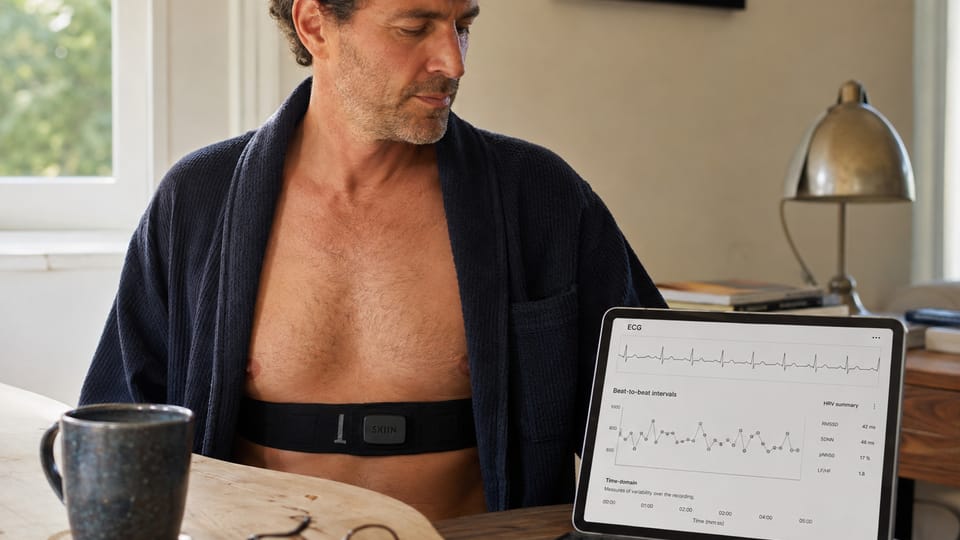
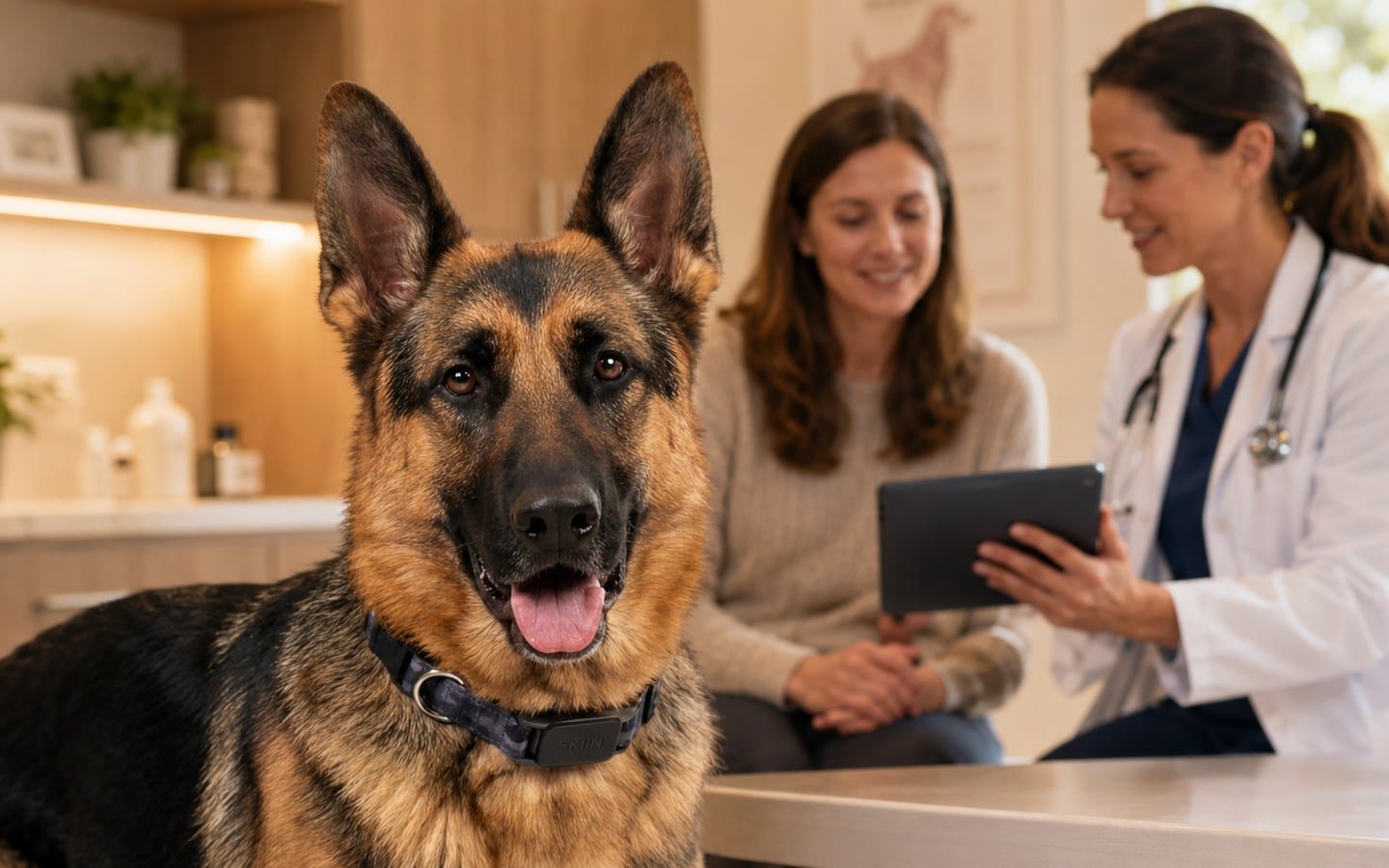 Animal health
Myant Animal Sciences
Textile sensing for animals, led by SKIIN™ Equine.
Myant Animal SciencesComing soon


Where the records live
Healthcare buyers verify. Each governance surface below is maintained on its canonical page — scoped to the product, study, or system it actually covers.
Evidence
Peer-reviewed publications and validation studies for the modalities a program draws on — including the textile-ECG validation of the tested dry-electrode construction (r² = 0.93).
Quality & regulatory
Regulatory status is specific to the identified product and intended use. Exact records are maintained on the Quality page and by the operating healthcare business.
Security & data governance
Access, permissions, storage, and permitted use are defined per program — security practices and data-ethics principles are documented separately.
Manufacturing readiness
Process development, pilot production, and scale-up staged against manufacturing-readiness levels, with quality systems applied within their certified scope.
Selected program work
Scoped examples from real programs — each attached to the configuration and study that produced it.
Post-surgical gait monitoring
- SKIIN Gen 1 and Gen 2 garments capture gait characteristics — stride length, cadence, symmetry — continuously for up to 90 days after surgery, demonstrated in program work.
Senior-care physical assessment
- Activity recognition across eight postures and activities reached ~98% accuracy, and fall detection ~99%, in internal feasibility testing — including instrumented Timed Up and Go (TUG) assessment for gait and fall risk.
Metabolic-rate estimation
- An internal model estimating metabolic rate (calories, VO2/MET) from garment sensors reported R = 0.93 with MSE 1.5 — a metabolic-rate figure, distinct from the ECG signal-quality anchor r² = 0.93.
Compression & limb health
- Textile pressure sensing can confirm the compression dose a garment actually delivers, and strain sensing points toward continuous limb-volume and edema tracking — the feedback missing from compression care, where adherence runs around 50–60%. Textile bioimpedance sensing is in development toward published bioimpedance-guided practice.
Post-operative NMES
- Dry-knitted NMES electrodes positioned over the quadriceps can activate muscle within 48 hours of a knee or hip replacement — supporting the muscle pump through the earliest recovery window, without gels or adhesive pads. In development toward clinical use.
The strength-loss window
- Quadriceps strength can fall by around 60% in the first four weeks after a total knee replacement, with weakness persisting for months — the clinical gap that early, consistent muscle activation is meant to close.
Caregiver & clinician loops
- Deviations from a monitored baseline may be configured to reach clinicians, caregivers, and family members through connected applications — the workflow pattern demonstrated in SKIIN-based deployments.
Program examples are scoped to their named configuration and maturity. Feasibility figures describe internal testing of the tested configuration — not cleared diagnostic claims; items in development are identified as in development.
Four ways a healthcare program starts
Medtech & diagnostics developers
A clinical measurement your device must make — and a form factor the body must accept.
What we configure · what you get
What MyantX configures- — Validated sensing constructions for the target signal set
- — Textile–electronics integration at a defined boundary
- — Verification and validation under design controls
Program outputs- — A wearable interface specification
- — A validated prototype with characterization data
- — A regulatory and manufacturing pathway
Digital health & remote monitoring
A care model that needs continuous, body-worn data people will actually wear.
What we configure · what you get
What MyantX configures- — Garment-based sensing configured to wear time and adherence
- — Connectivity and governed data flows into your platform
- — Evidence planning for the monitored population
Program outputs- — A connected-garment program definition
- — An integration architecture with your stack
- — A wear-and-adherence evaluation plan
Rehabilitation & therapeutic developers
A therapy — stimulation, thermal, or compression-adjacent — that should live in a garment.
What we configure · what you get
What MyantX configures- — Dry-electrode NMES and zoned thermal constructions
- — Dose delivery with confirmation sensing
- — Usability and comfort engineering for daily wear
Program outputs- — A therapeutic-garment concept and specification
- — A bench-validated therapy prototype
- — A clinical-evaluation starting package
Clinical & research collaborators
A study question that needs continuous physiological data outside the lab.
What we configure · what you get
What MyantX configures- — Instrumented garments configured to the studied protocol
- — Signal validation against reference systems
- — Data access structured for analysis
Program outputs- — A study-ready garment configuration
- — A validation record for the measured signals
- — A publication-grade methods basis
Build an interface that gets worn
Bring the clinical need, the intended use, and the form the body must accept. We engineer the materials, sensing, response, evidence, and manufacturing pathway — scoped from the start.